hokie transit bike HuB
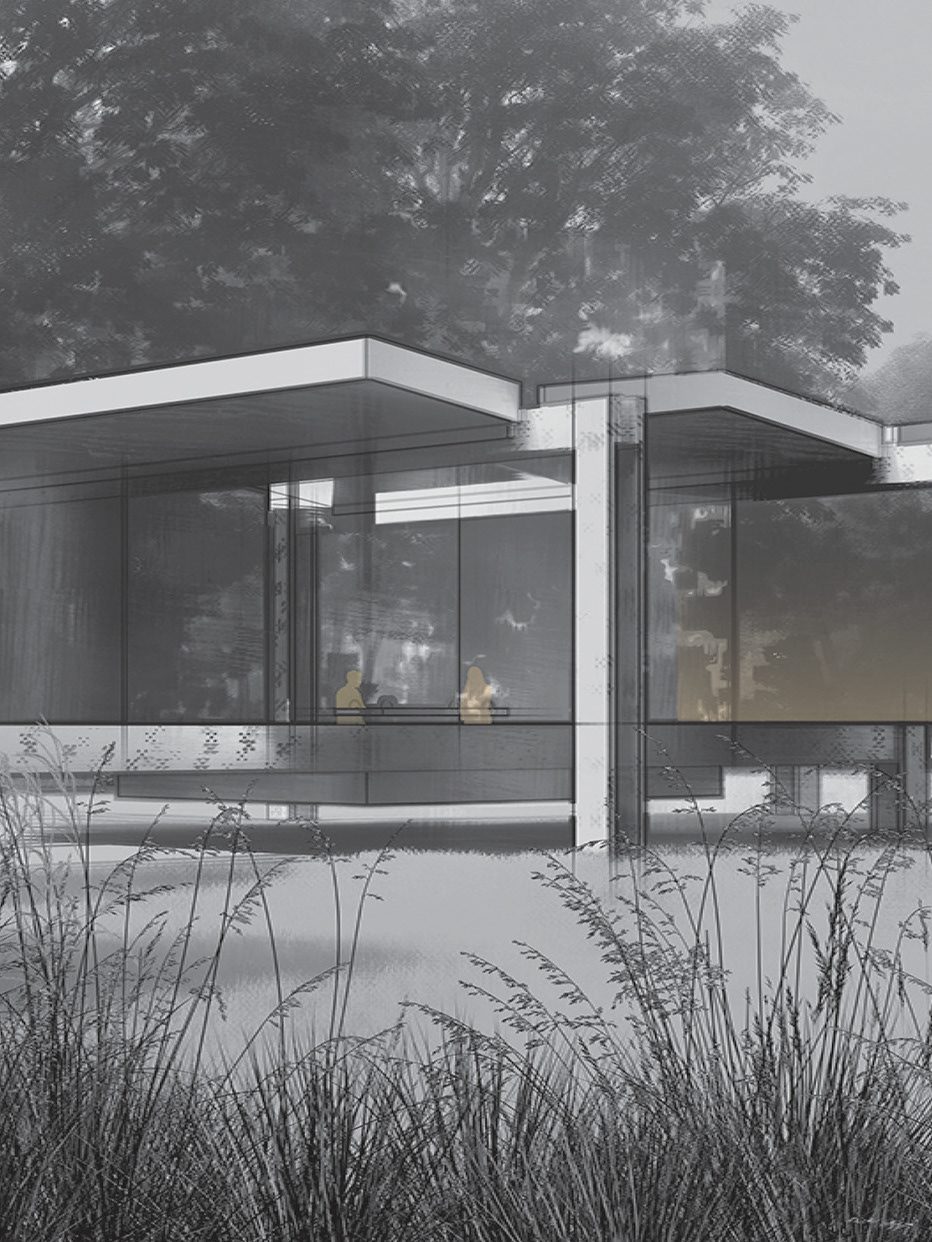
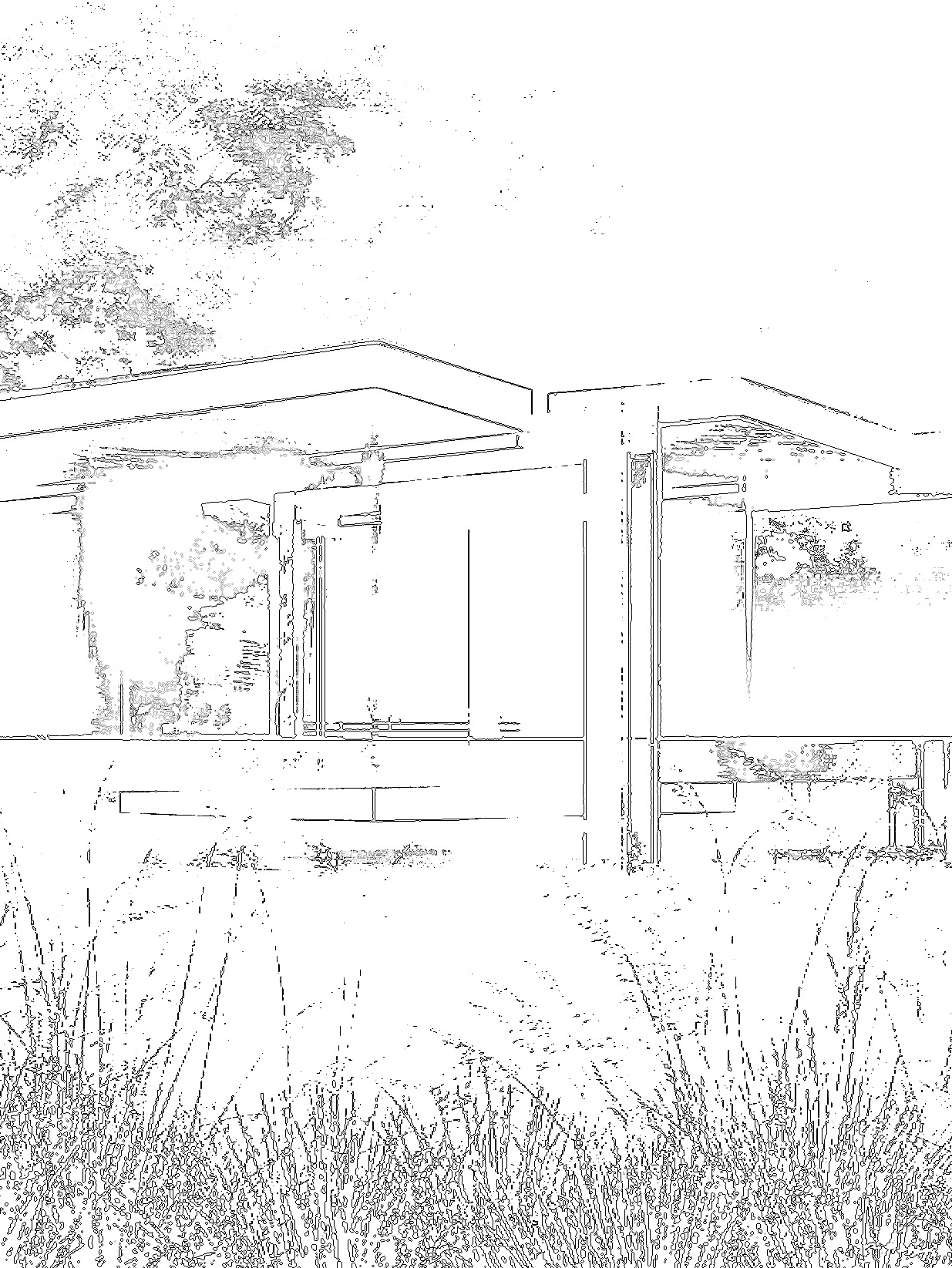
Nestled in the Blue Ridge Highlands exist a critical intervention. A community hub — representing a central anchor of campus circulation — geared to form a connective node for daily commuters.
location
BLACKSBURG VA
TYPE
COMPETITION
size
100 000 sf
RECOGNITION
HONORABLE MENTION /150
STARTED
3rd YEAR | 2023
future friendly design
Mass timber
meadow roof
Project Brief
Tasked with crafting an architectural position in the form of a bike-hub, this response must address a sloping ground, bike storage solutions and abide by accessibility requirements.
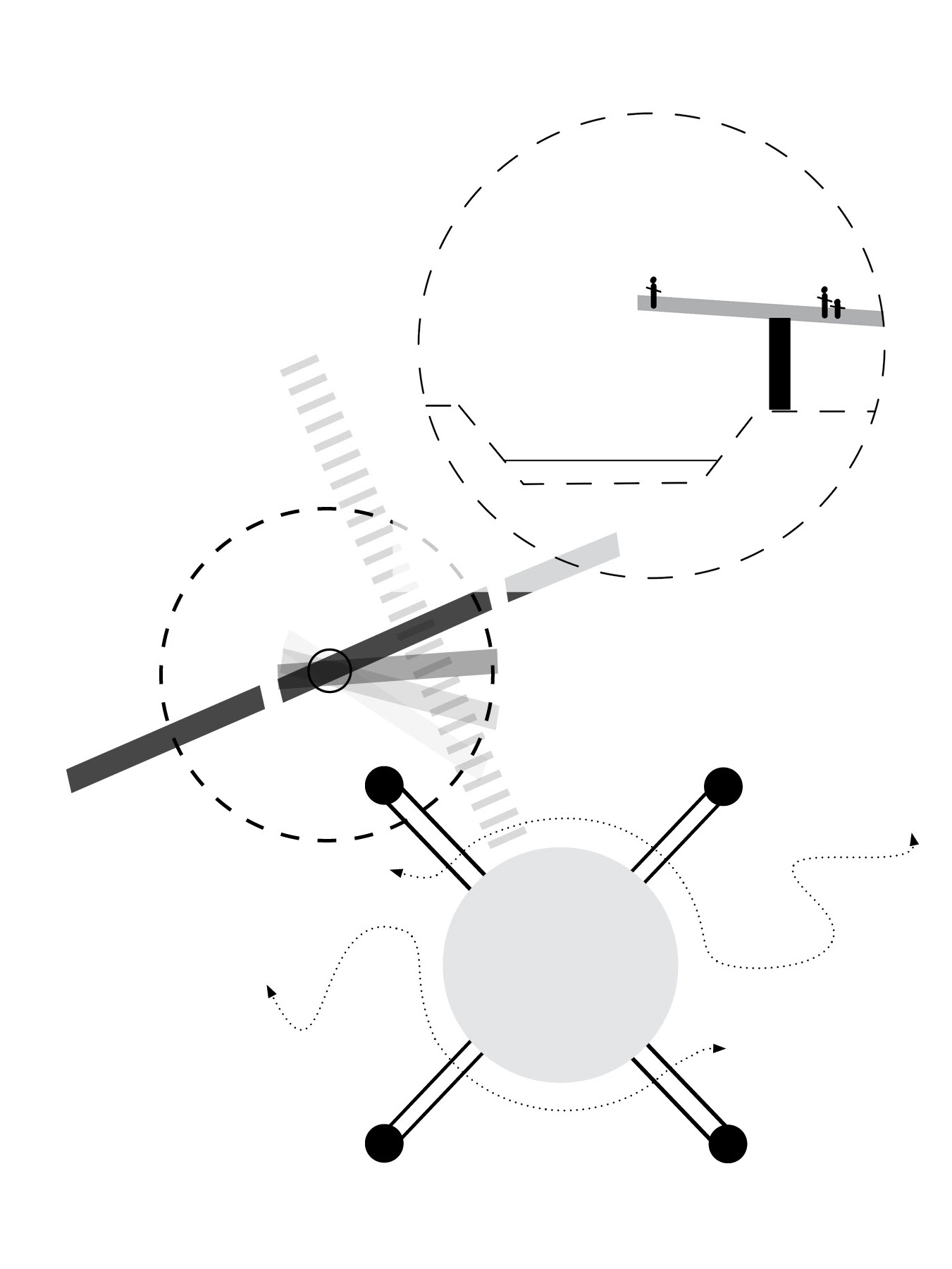
The proposal creates a formal intersection, at its center exist seating and information displays rounded by pedestrians on wheels and on foot. The harmonious display of circulation joins four corners of traffic fleeing from the Maroon bay, Orange bay, northeast and northwest corners. Grounded by a concept of density and urbanism, this convergence engages commuters and improves efficiency of Cowgill Lawn.
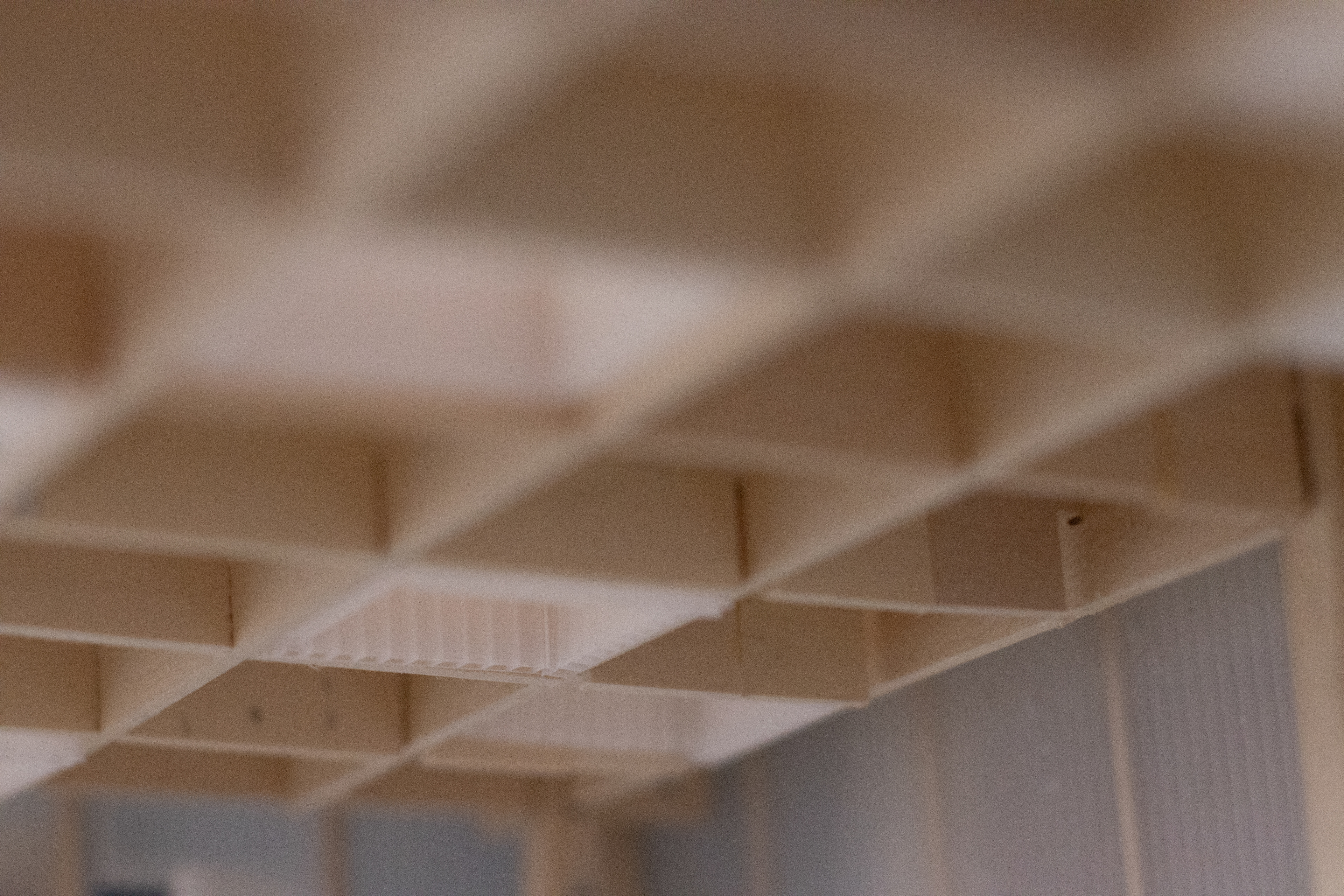
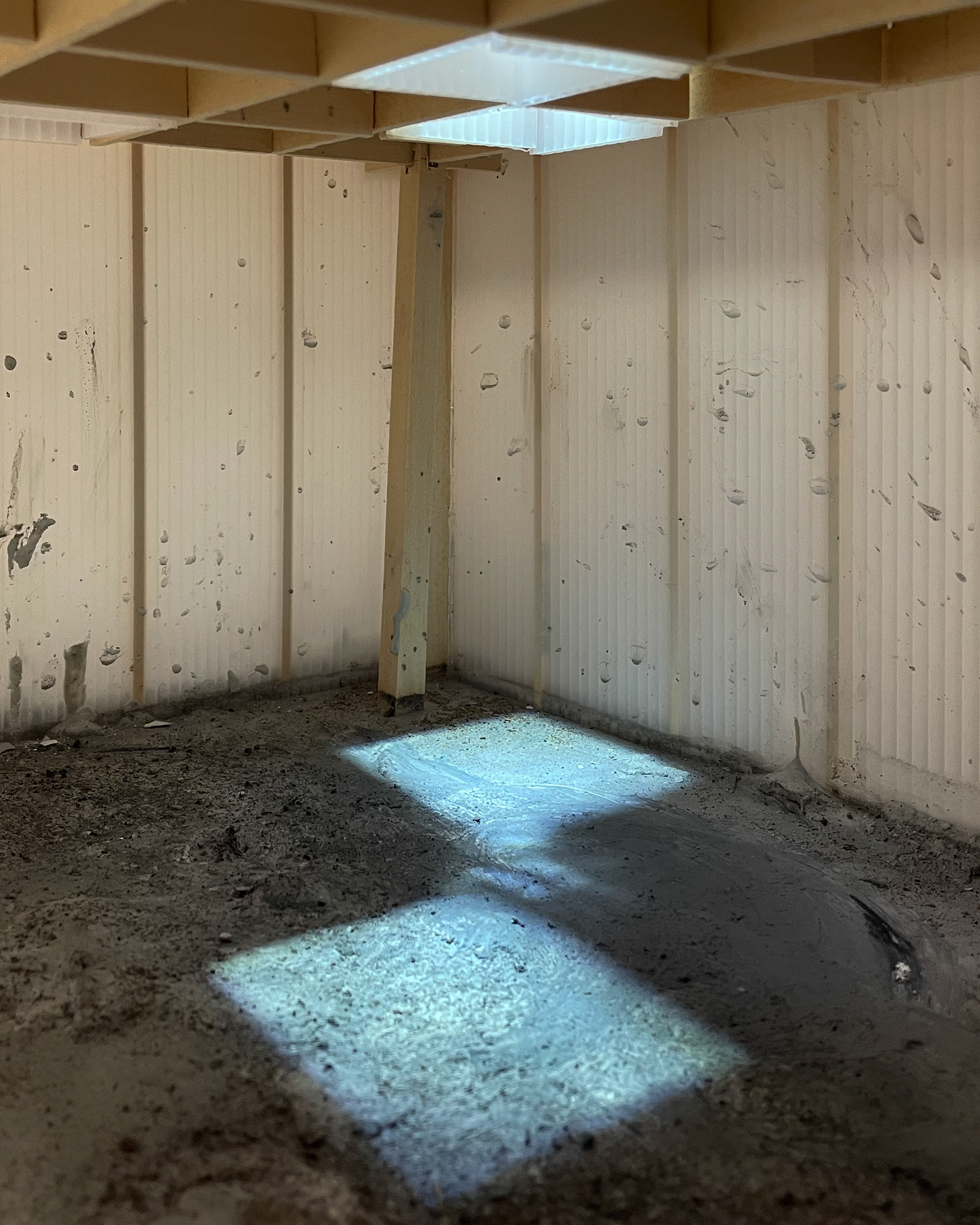
From the beginning, it was imperative to introduce natural light into the space. What started as an interest in making the interior space brighter, quickly evolved into a mission of using opaque and semi-transparent light, diffused in the workspaces and servicing buildings. Removing the idea of a medieval fortress, closed off from those outside; the introduction of light softened the interior. An interest in connecting the what happens outside back inside enabled lightwells that dependent on the angle and intensity of the sun, light would in onto interior surfaces. This dramatic lighting could be used sparingly for desired tasks or animate the space with natural movement.
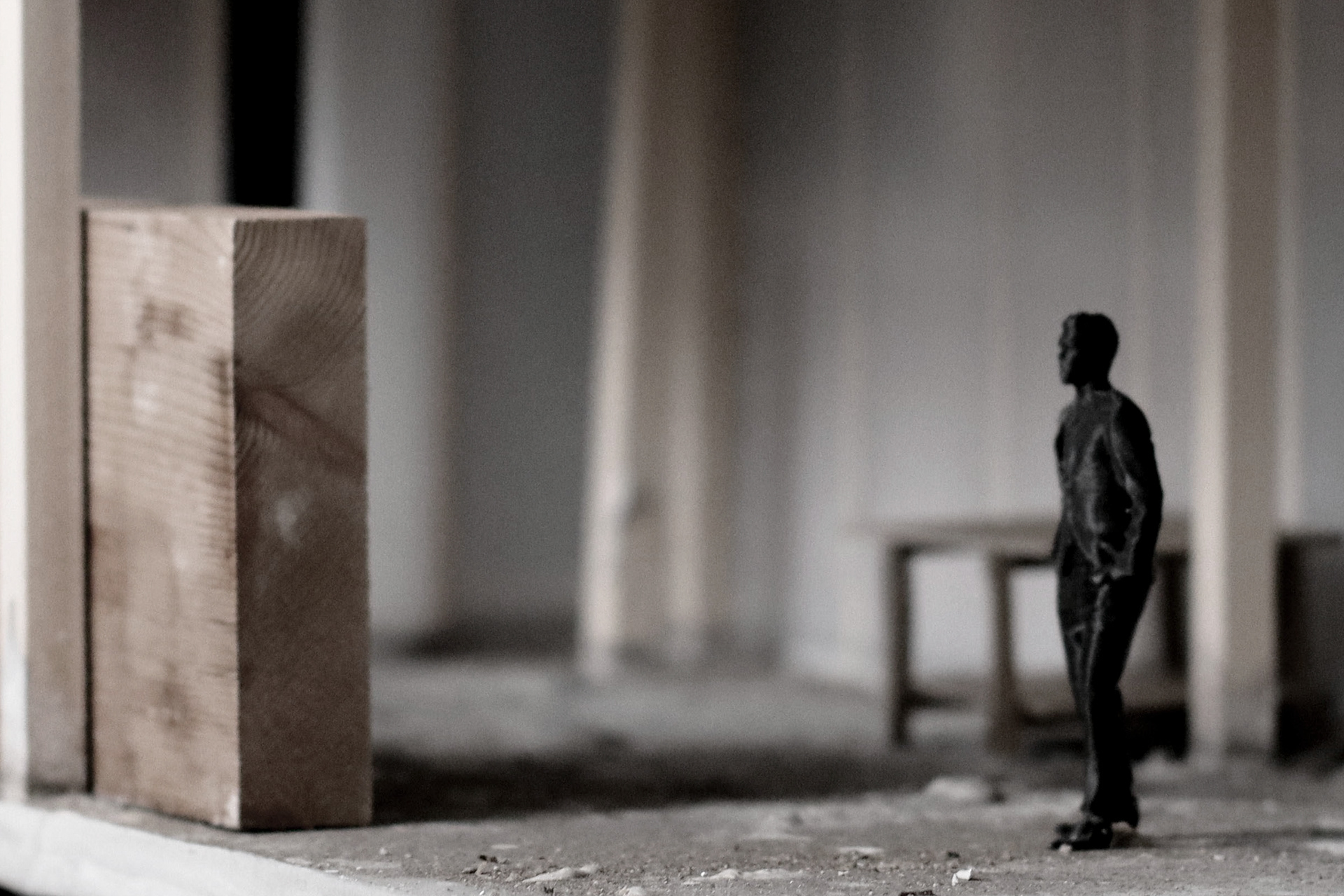
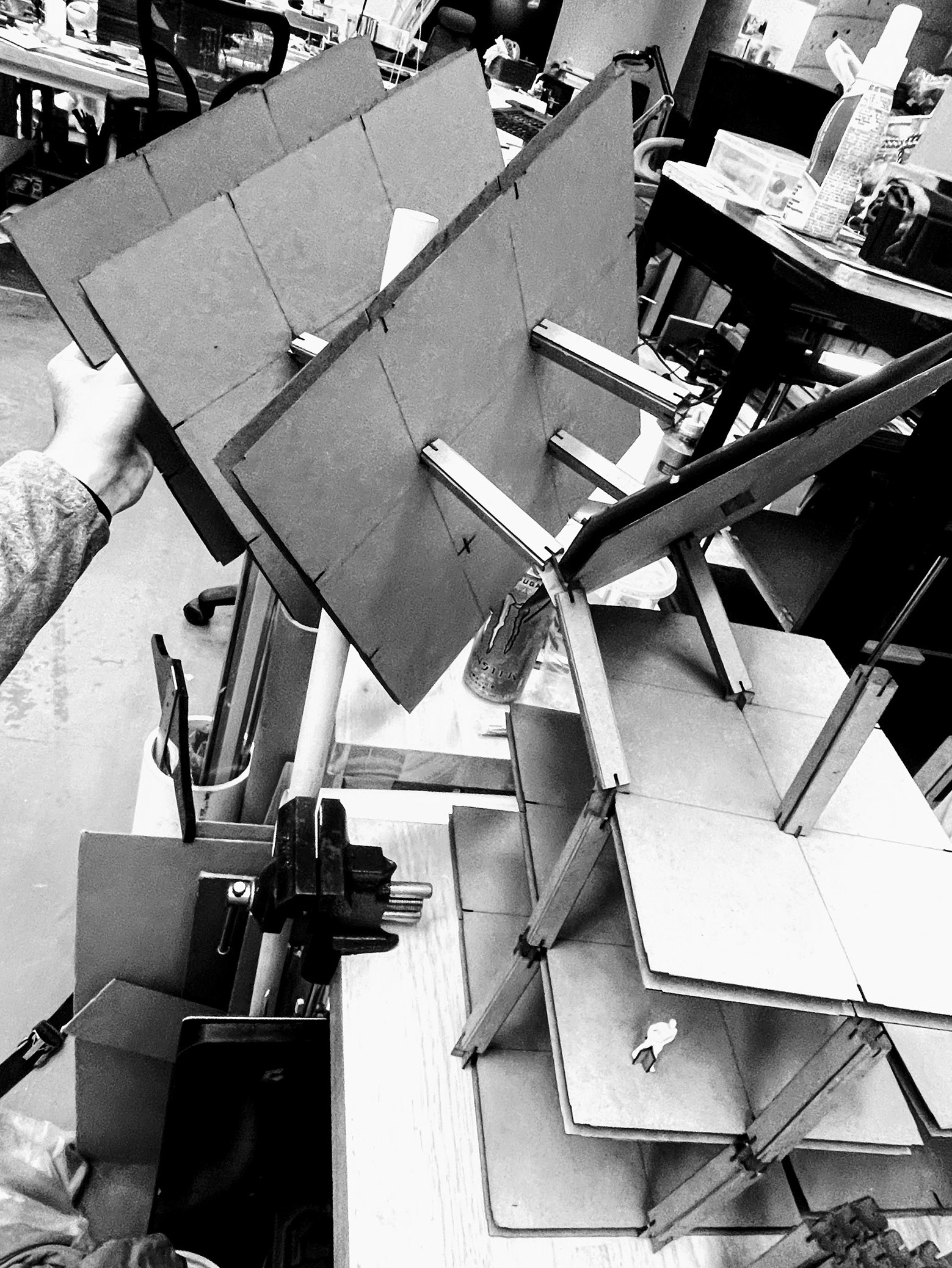
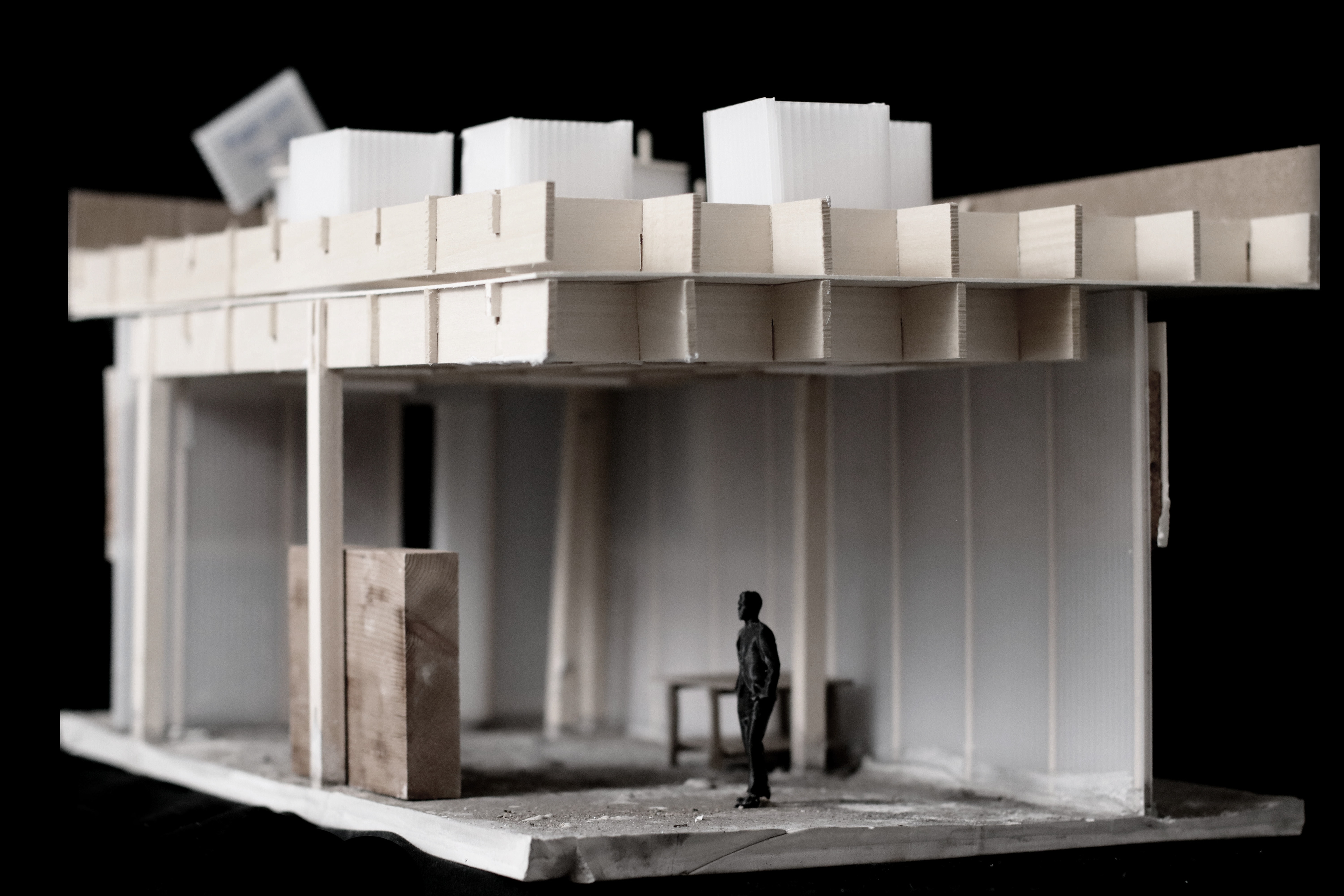
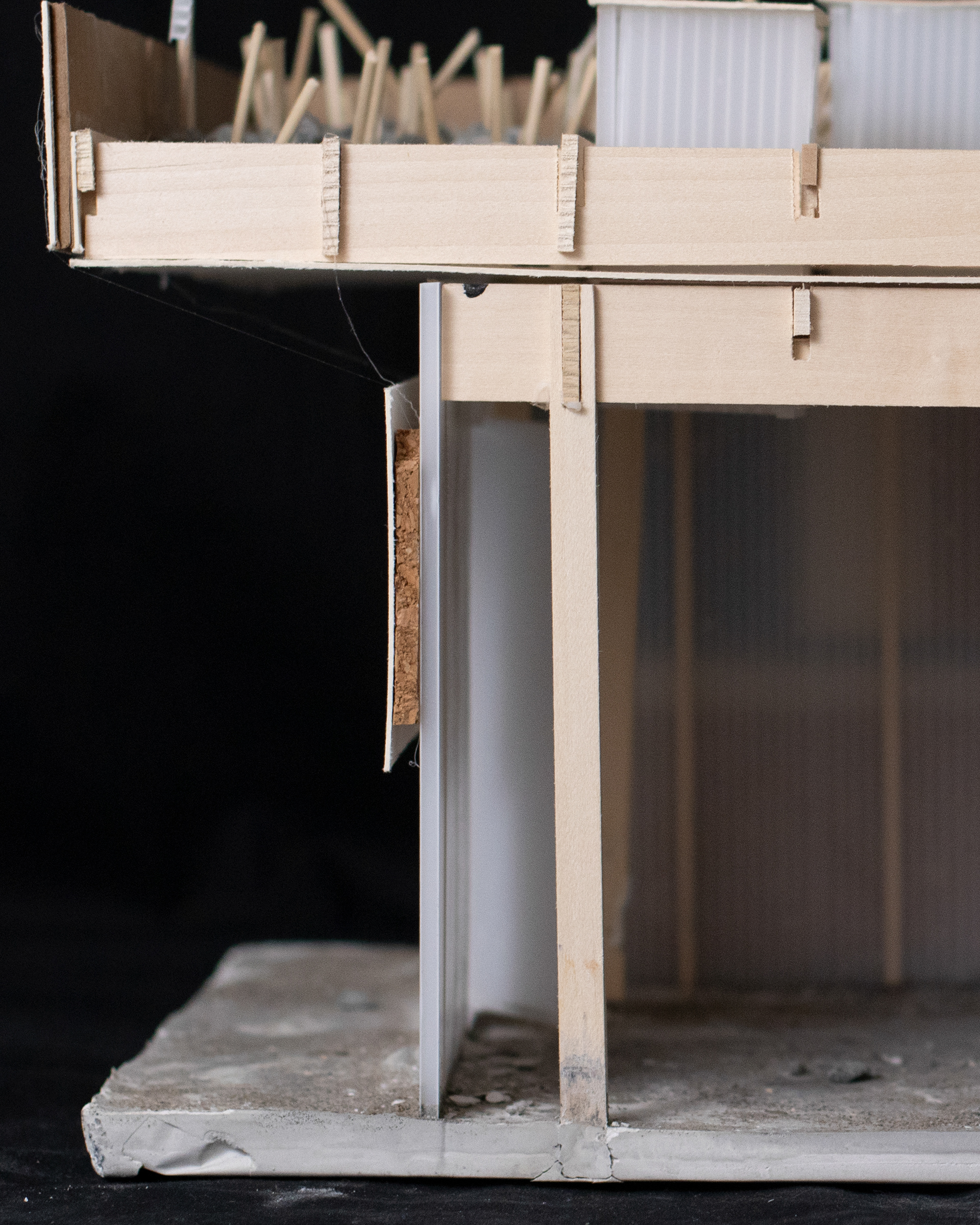
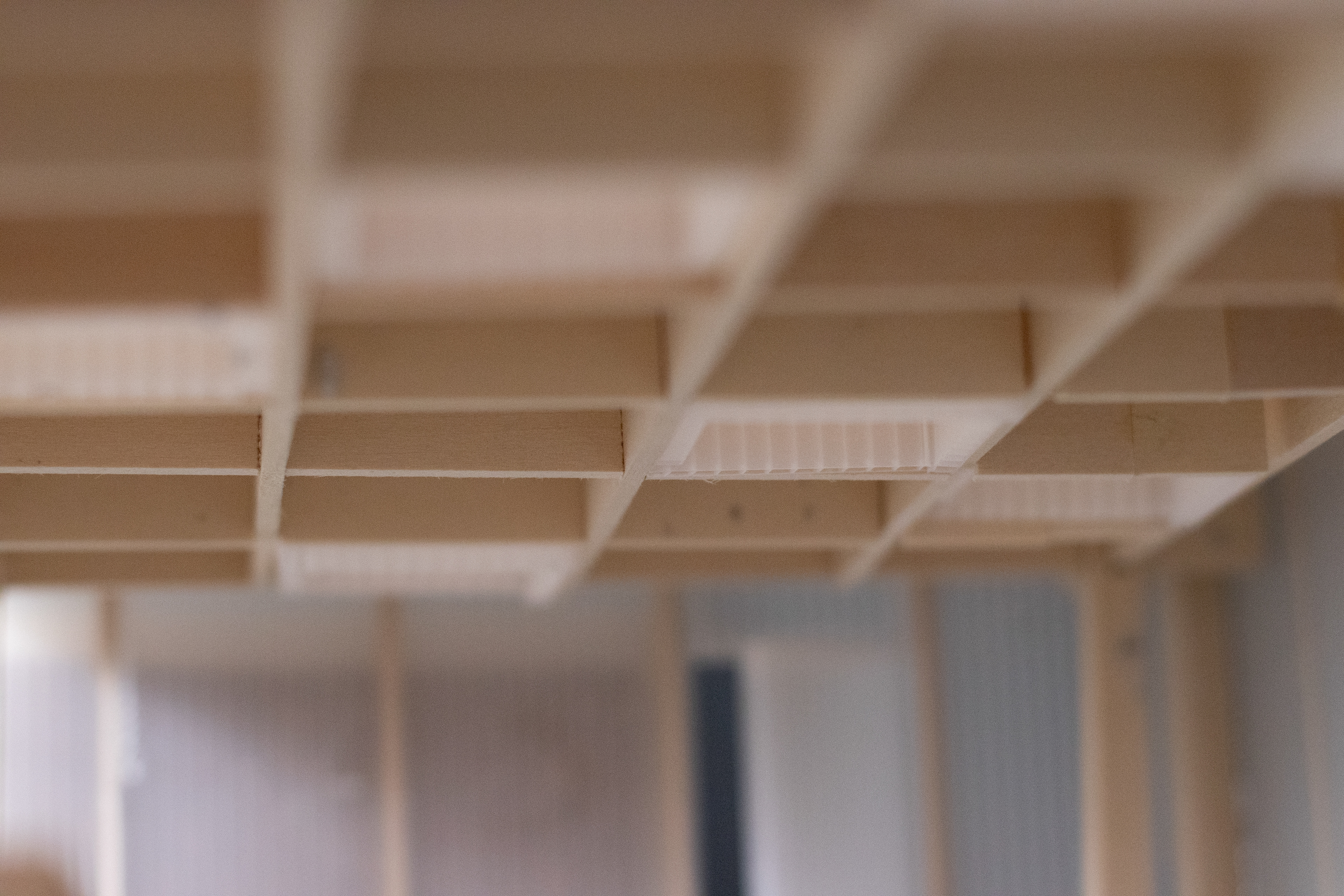
Anticipating large volumes of people to use these spaces — students, faculty, and visitors — it was important to use an open floorplan. The experience on campus is already directionally winding and occasionally sharp cornered that more walls and dead ends would introduce added confusion. Therefore, each building — the cafe, the repair shop, the restroom and the enclosed storage — evokes openness through long waffled spans and an independent rainscreen to achieve an accessible means of moving from place to place when on the go.
.
STRUCTURE + sustainAbility
The mass timber roof softens the interior, welcomes sunlight and supports a meadow.
The roof implores a mass timber structure, this sustainable feature brings comfort to the incoming commuters and becomes a monumental feature of each building. A meadow can be seen from above; this greenery and vegetation is self sustaining and camouflages an otherwise low and dull roof. The roof serves as more than just a spectacle, it empowers a need for nature to coexist with the buildings we make.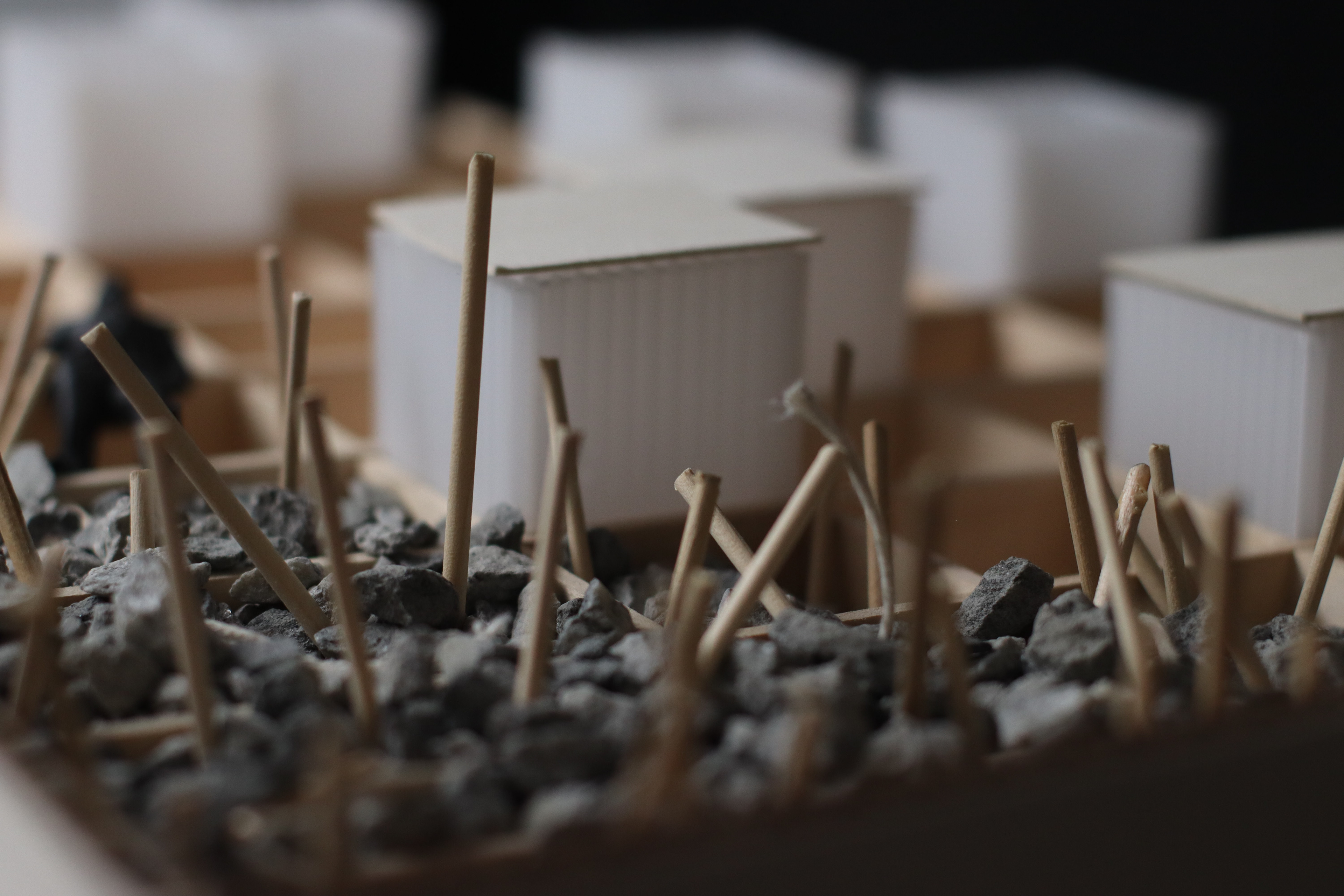
MATERIALITY + PLACE
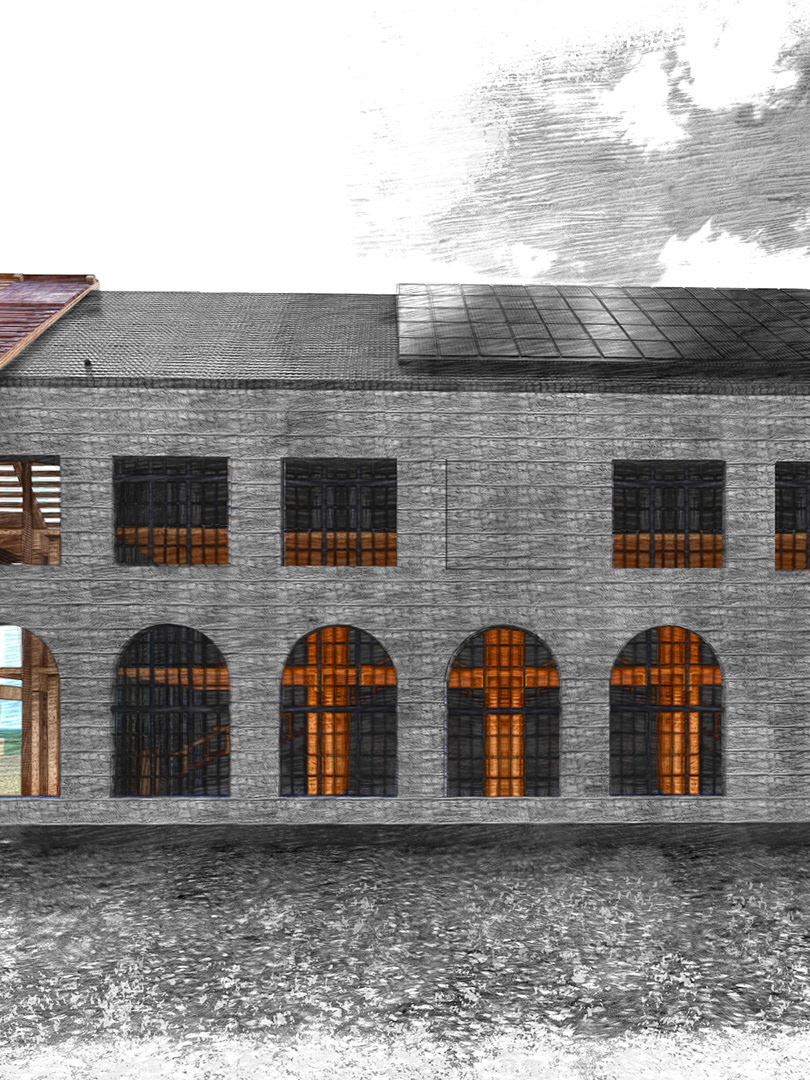
"Hokie stone" defines the design culture of Virginia Tech — a pattern that unifies the campus and serves as a sense of place.
Traditionally, campus buildings display the locally mined dolomite-limestone in its solid rock form. A few decades later, campus design has experienced a shift in its load bearing needs for more free-formed, casted-concrete paired with a steel structure. This decision, however is taken one step farther with a consideration to material honesty. The proposal is not pursuing the intention of removing the current symbolic format but it does now identify Hokie stone more truly as a pattern and as a palette. As a pattern on glazing, Hokie stone serves a new set of aesthetic needs heavy stone does not; catering to the lively environment students, faculty and visitors seek for mental wellbeing. As a palette it welcomes the impacts of weathering and luminance, similar to the physical properties of this sedimentary rock, tying an identity within Blacksburg to its geographical surroundings.
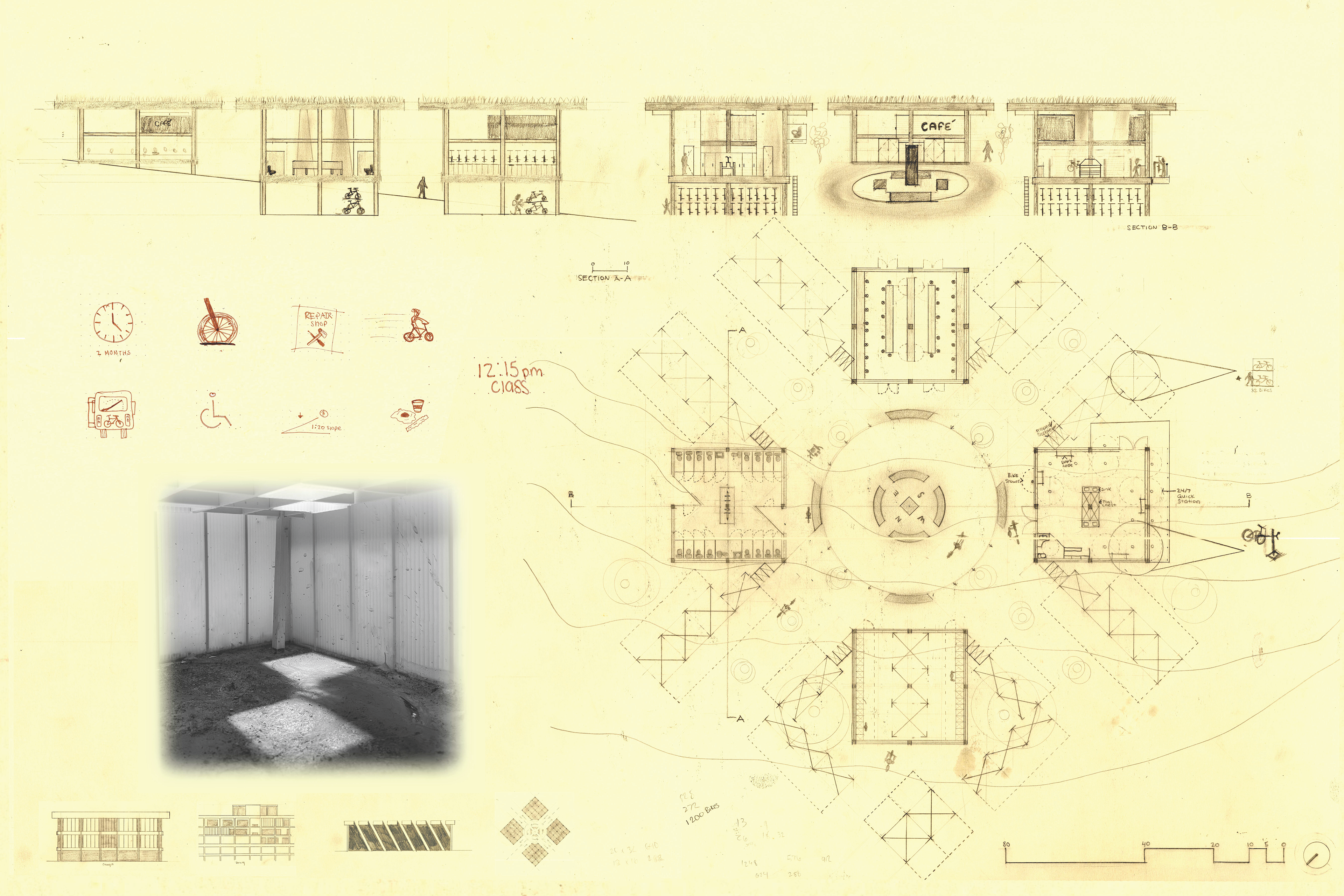
Presentation Board 1 WK
SITE + CIRCULATION
Architecture used to imagine a "mini town", acting as a dynamic threshold—bringing people together and improving commuter awareness.
This intervention imagines an intersection as a strategic and dynamic condition that responds to a sloping hill and constant foot traffic. This approach favors services students, faculty and visitors might need overlayed by directional pathways. Stacking bike racks can be found along each intersecting path, these racks serve as a convenient storage solution while the south building is an enclosed multi-level and long-term storage space. The north building features a cafe-style grab and go; food is brought from nearby dining halls and available hourly. The unisex bathroom to the west and repair shop to the east make up the remaining buildings. These four buildings act as a holistic mini-town serving incoming and outgoing guest between campus and it's bus hub.
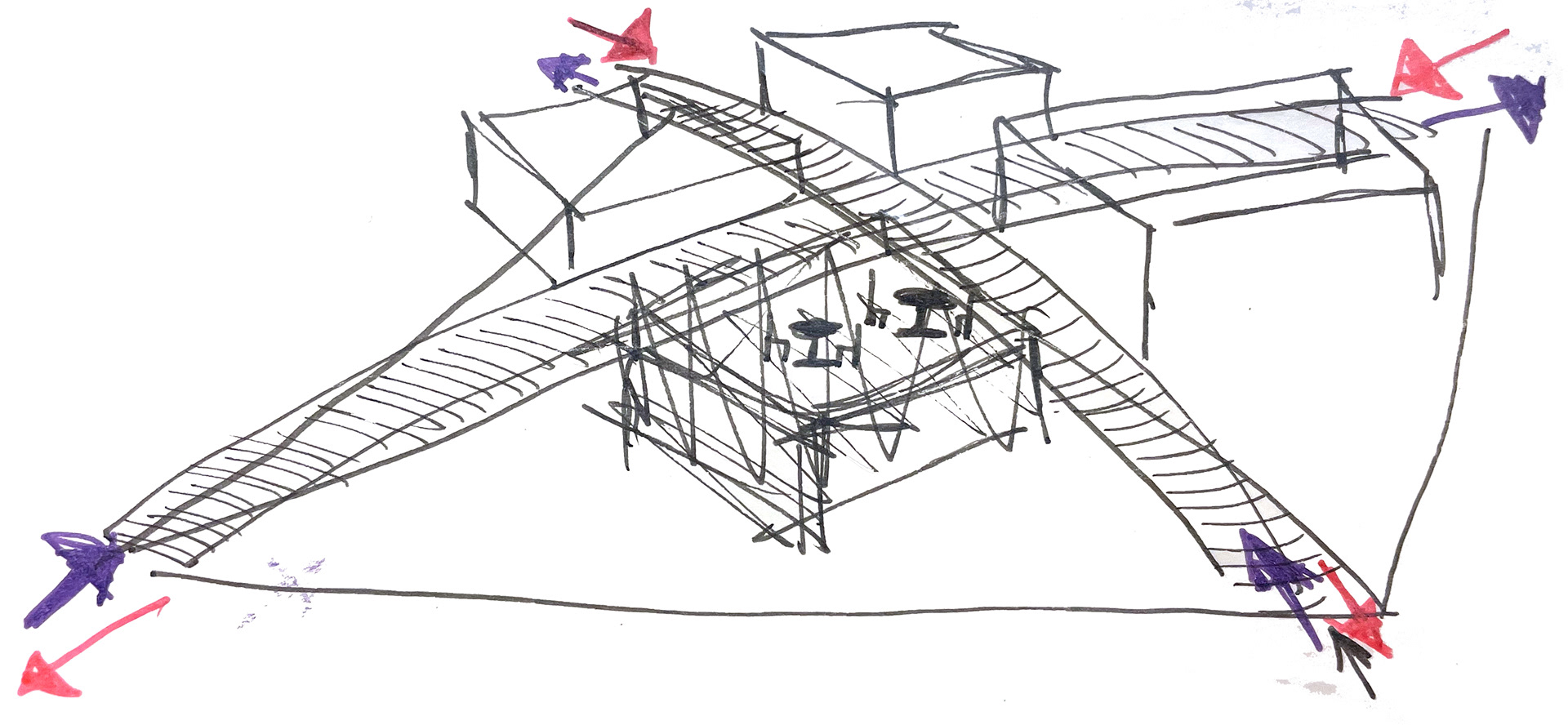
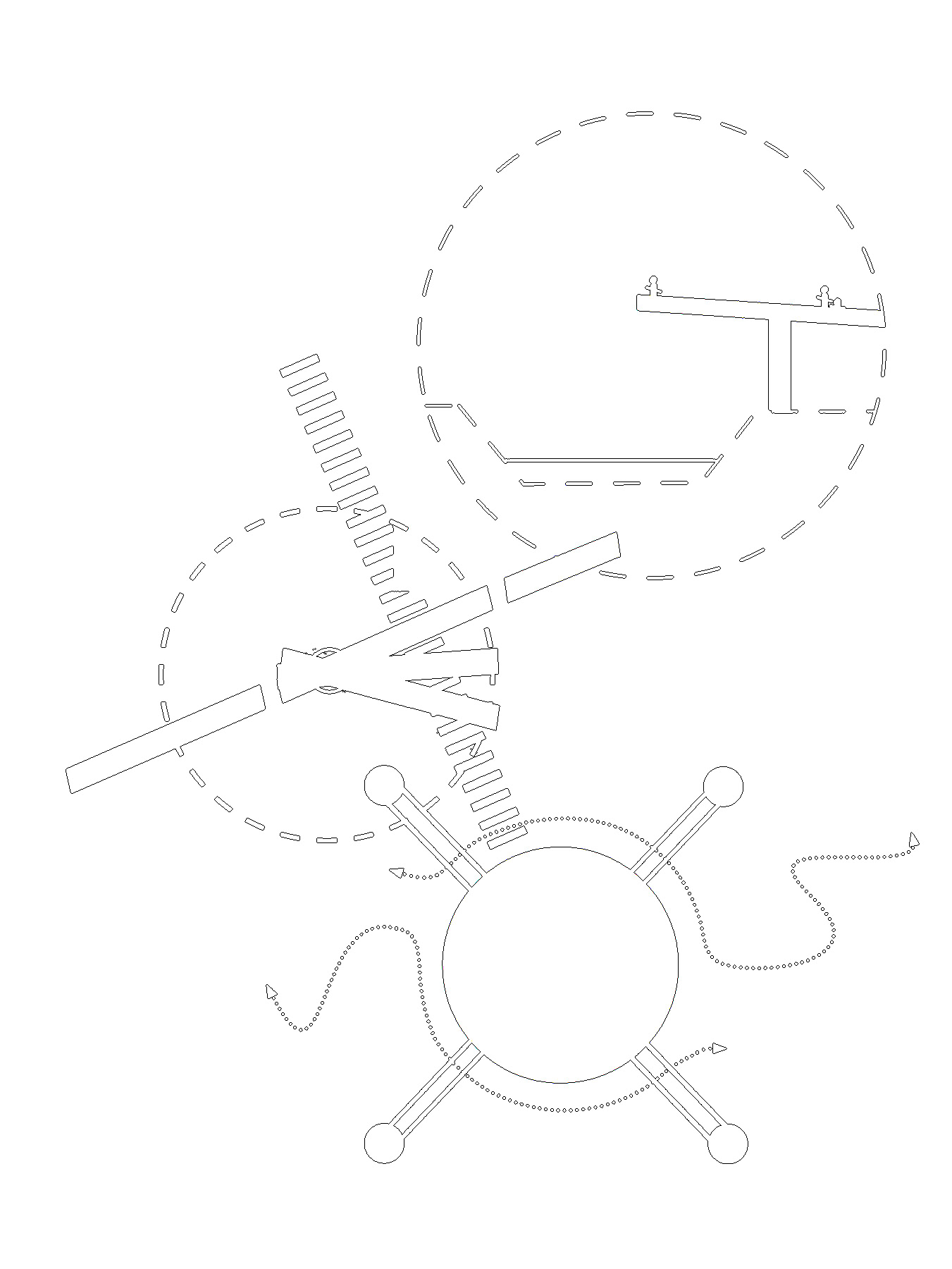
Early Diagram - Parti
Conclusion
A competition that calls for a bike hub should provide more than just the basics, it should be a catalyst for upcoming campus design.
The design takes from smaller European cities — an encouragement to vibrant, clustered environments — making use of tight space. Buildings, people and shops collectively bring a sense of place while attention to light and materiality re-characterizes campus aesthetics. While the aim is to improve efficiency and wellbeing of those who visit and dwell, the ideal scenario is that the university benefits from unforeseen positives and negatives of its creation as an experiential and experimental intervention that benefits campus identity.
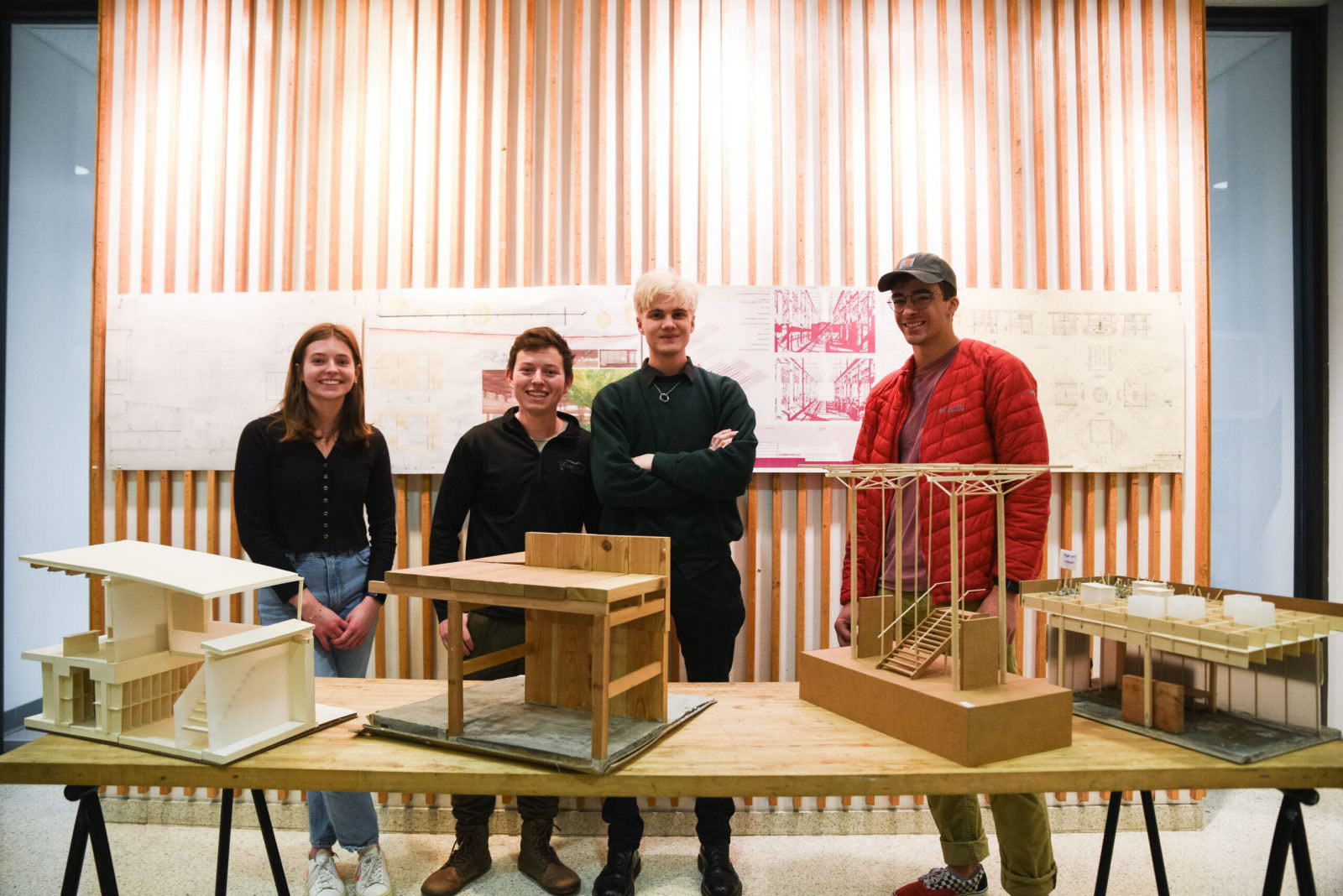
Sourced: https://arch.vt.edu/news-and-events/fall-2022/2023-3rd-year-competition.html